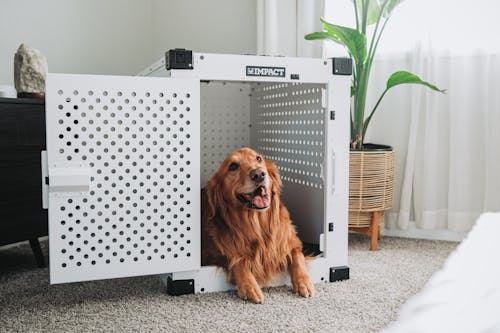
While our canine friends bring joy and energy into our homes, they also thrive on structure and guidance. One highly effective method is crate training. It is a positive and gentle way to give your dog a safe space they can call their own.
Dogs truly are man’s best friend — and the numbers prove it. According to the PDSA, around 11 million pet dogs enjoy life across the UK. This is a solid 20% higher than the cat population. That’s a lot of wagging tails, walkies, and loyal companionship.

What Is Crate Training?
Crate training is the process of teaching your dog to relax, sleep, and spend short periods in a crate or enclosed space. A crate acts as your dog’s personal den – a calm, secure place where they can unwind and feel at ease.
Crate training isn’t about confinement; it’s about comfort. When done correctly, your dog will start using their crate voluntarily, much like a cosy bedroom they retreat to for rest.
Why Crate Train Your Dog?
If you’re a new dog owner, it’s natural to wonder why crate training is important – or whether it’s fair to your pet. Rest assured, crate training is not a punishment.
Here are a few key benefits of crate training:
- Creates a safe space: Your dog learns they have a peaceful area just for them.
- Aids in house training: Dogs rarely soil their sleeping spaces, helping with toilet training.
- Reduces anxiety: Especially useful when travelling or introducing your dog to a new home.
- Prevents destructive behaviour: Keeps curious dogs out of trouble while you’re away.
- Supports multi-pet households: Crates help separate pets safely and reduce tension.

Peaceful coexistence is easier to achieve when everyone – furry friends included – has their own space. While multi-pet insurance can help protect against the unexpected, proper crate training can prevent issues before they start.
How to Choose the Right Dog Crate
Selecting the right crate size and type makes a big difference in your dog’s comfort level.
Keep these tips in mind:
- Size matters: Your dog should be able to stand up, turn around, and lie comfortably.
- Material choice: Metal crates are ideal for chewers, while plastic or fabric options are better for calmer dogs or travel.
- Easy to clean: Choose a crate with a removable base tray.
Measure your dog to get the right fit – this ensures they feel cosy but not cramped.
Step-by-Step Crate Training Tips
Successful crate training takes patience, positive reinforcement, and consistency. Follow these steps for best results:
- Create positive associations: Allow your dog to explore the crate freely at first. Place a soft blanket or favourite toy inside.
- Use treats and praise: Reward your dog when they approach or enter the crate. Positive reinforcement helps build trust.
- Introduce commands: Use a cue word such as “bed” or “crate” to help them understand the association.
- Close the door gradually: Start by closing the crate for just a few seconds. Then, extend the time as your dog relaxes.
- Never force it: If your dog whines or seems distressed, open the crate and try again later.
Over time, your pup will begin taking themselves to the crate voluntarily – a sure sign of success!
Crate training your dog is one of the most rewarding parts of pet ownership. It builds trust, supports healthy routines, and helps prevent behavioural issues. With patience, positivity, and the right setup, your dog will learn to love their crate as their own happy haven.
Looking to make dog ownership even easier? Combine crate training with a strong daily routine, consistent training habits, and regular vet check-ups to keep your pet healthy and content.
Leave a Reply